
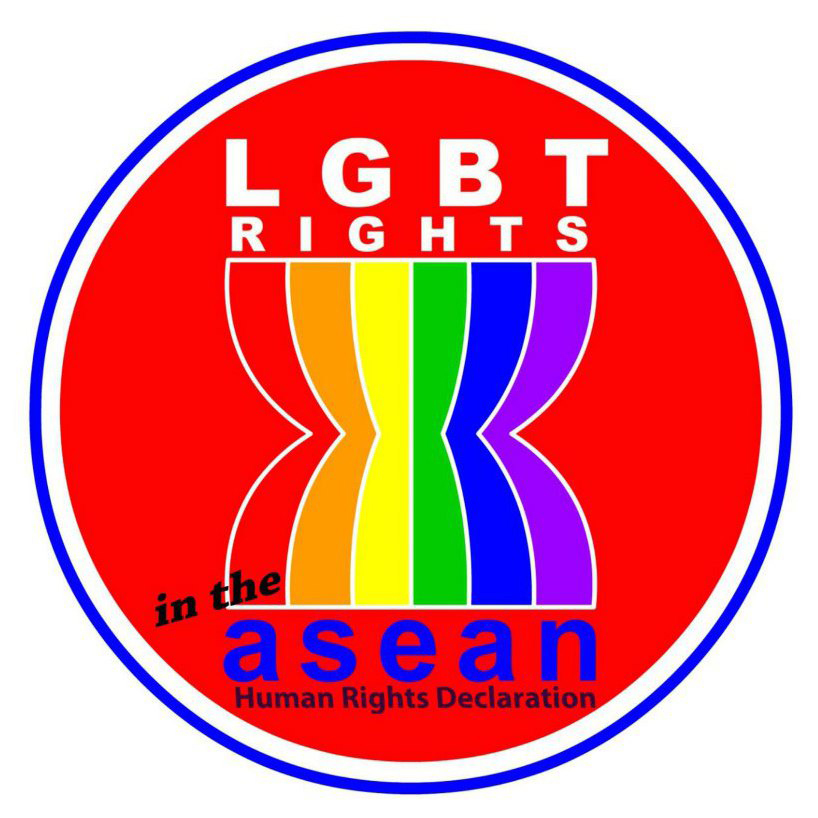
ASEAN Human Rights Declaration Refuse to Protect LGBTIQ Rights!
 This week November 18, 2012 at the ASEAN Summit in Phnom Penh, Cambodia, the Association of Southeast Asian Nations (ASEAN) heads of state adopted the first ever ASEAN Human Rights Declaration (AHRD). To the grave disappointment of representatives of the lesbian, gay, bisexual, transgender, intersex and queer (LGBTIQ) peoples through out the region, the declaration did not include protections for this highly vulnerable group.
We, the ASEAN LGBTIQ Caucus[1] are outraged and disappointed by the decision of the ASEAN Head of States to adopt the AHRD that excluded sexual orientation and gender identity (SOGI). Despite countless attempts and demands by the members of civil society, including LGBTIQ groups, to push for its inclusion, ASEAN have remained reticent to the attempts. This AHRD not only shows a lack of respect to LGBTIQ people but also makes a mockery of the international human rights values and principles that all nations and citizens abide by and are held accountable to.
“Evidently, the numerous failed attempts to engage with AICHR and the recent adoption of ASEAN Declaration with no mention of SOGI, sends a clear message that the human rights of LGBTIQ people are irrelevant to them,” explained Vien Tanjung, founder of Her Lounge.
All 10-member countries of ASEAN have ratified the Convention on the Elimination of All Forms of Discrimination Against Women (CEDAW) and the Convention on the Rights of the Child (CRC), which have specific provisions of non-discrimination on the basis of sexual orientation and gender identity, and are therefore, obliged to protect and promote the rights of LGBTIQ people in the ASEAN region.
“Malaysia is a member country of the UN Human Rights Council and Malaysia was re-elected for the second term this year. It is shocking that ASEAN with such collective expertise and knowledge on human rights; discrimination is still persistent in this region. This is evidenced by the exclusion of SOGI in the AHRD,” said Thilaga, an LGBTIQ activist.
In order for the AHRD to be a relevant and credible human rights tool that protects and benefits the ASEAN community as a whole without discrimination as it aspires to be, the declaration has to be consistent with existing international human rights laws.
Jean Chong of Sayoni from Singapore also expressed her disappointment to the exclusion of SOGI in the AHRD. “No ASEAN citizen can aspire to her/his fullest potential as a citizen in their respective country with the tunnel vision and self serving approach of their governments.”
“We encourage everyone to publicly denounce support and legitimacy of the ASEAN Declaration. The priority of this declaration is not human rights, but economic and political interests of the ASEAN states at the expense of the ASEAN peoples,” explained Ging Cristobal, International Gay and Lesbian Human Rights Commission (IGLHRC)
BACKGROUND
The Association of Southeast Asian Nations (ASEAN) is a regional organization established in 1967 that comprises of countries in the South East Asia region. In 2009, the ASEAN Intergovernmental Commission on Human Rights (AICHR) was formed to promote and protect the human rights of people in the region and was tasked to formulate the ASEAN Human Rights Declaration (AHRD), which aimed to standardize all human rights of all people in the Southeast region of Asia.
All submissions are republished and redistributed in the same way that it was originally published online and sent to us. We may edit submission in a way that does not alter or change the original material.
Human Rights Online Philippines does not hold copyright over these materials. Author/s and original source/s of information are retained including the URL contained within the tagline and byline of the articles, news information, photos etc.



![[People] No more safe spaces for journalists in Gaza | by Fr. Shay Cullen](https://hronlineph.com/wp-content/uploads/2025/09/unnamed.jpg?w=800)
![[Statement] TDC Statement on the bill to repeal CPD LAW](https://hronlineph.com/wp-content/uploads/2025/09/tdc-on-cpd-law.png?w=1024)
 Human Rights Online Philippines
Leave a comment