
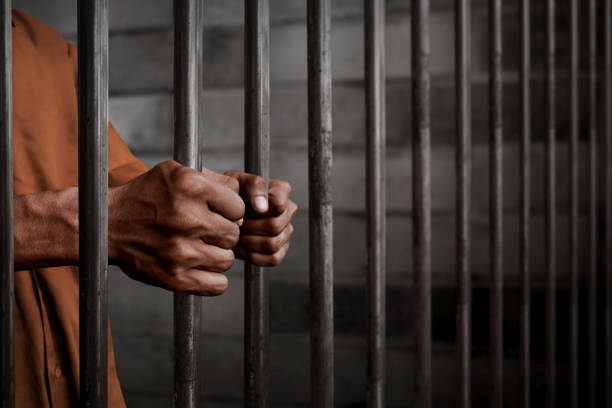
In a world that often feels overwhelmed by violence and despair, the quest for justice
and healing remains a pivotal discussion point, particularly within the context of the
Philippines. It’s still, and should be a firm stand against the death penalty, advocating
instead for restorative justice as a more compassionate and effective alternative.
The death penalty often fails to deliver true justice. Numerous studies have shown that it
does not deter crime more effectively than life imprisonment. In many cases, it leads to
irreversible miscarriages of justice, where innocent individuals are executed for crimes
they did not commit. The emotional and psychological toll on families, both of victims
and those wrongly accused, is profound and lasting.
As our society grapples with complex issues surrounding crime, justice, and
accountability, the debate over the death penalty in the Philippines presents us with a
pivotal moment. Rather than resorting to capital punishment, which offers little in the
way of true justice, we should advocate for restorative justice as a humane and
effective alternative. This approach not only nurtures healing and reconciliation but
also allows us to build a more compassionate society.
I think we could all agree that the death penalty has been a longstanding contentious
issue, prompting discussions about its effectiveness as a deterrent to crime. Studies show
that the threat of execution does not significantly reduce crime rates. Instead, it
perpetuates a cycle of violence and retribution, failing to address the root causes of
criminal behavior. In essence, capital punishment often serves to satisfy a public
craving for vengeance rather than deliver a sense of justice or closure.
Restorative justice, on the other hand, invites us to rethink how we define justice itself.
When we had our (Coalition Against Death Penalty – CADP) meeting, we focused and
embraced how this approach emphasizes accountability and rehabilitation over
punishment, which should be understood by many. Central to this philosophy is the idea
that justice should prioritize the needs of victims while also addressing the underlying
issues that lead to crime.
In a restorative justice framework, offenders are encouraged to take responsibility for
their actions through meaningful dialogue with victims and the community. This process
has the potential to heal wounds and restore relationships, fostering understanding
rather than division.
One of the most compelling arguments against the death penalty is the irreversible
nature of the sentence. Mistakes can and do happen in any legal system. The possibility
of executing an innocent person is a miscarriage of justice that cannot be undone. By
rejecting the death penalty, we affirm our commitment to a justice system that
prioritizes human life and dignity. Emphasizing restorative justice allows us to seek
alternatives that acknowledge the potential for growth and change.
Leo Pilo Echegaray (11 July 1960 – 5 February 1999) was the first Filipino to be executed
after the reinstatement of the death penalty in the Philippines in 1993, some 23 years
after the last judicial execution was carried out.
Echegaray was executed via lethal injection on February 5, 1999. Echegaray was told
of the court ruling at noon, three hours before he was to die by lethal injection at
Manila’s New Bilibid Prison. He is the first man to be executed in the Philippines since
1976.
Echegaray’s final statement was:
“Sámbayanáng Pilipino, patawarin ako sa kasalanang ipinaratang ninyo sa akin. Pilipino, pinatáy ng kapwa Pilipino.
Furthermore, restorative justice recognizes that crime is often a symptom of deeper
societal issues, such as poverty, lack of education, and mental health struggles. By
addressing these root causes, we can deter future crime more effectively than through
punitive measures. Investing in community programs, education, and mental health
services is essential to fostering a safe environment where individuals can thrive.
Victims of crime also deserve our compassion and support. The death penalty rarely
provides true closure for families; rather, it can leave them with unresolved grief.
Restorative justice offers a space for victims to express their pain and seek healing.
Through dialogue and support, victims can reclaim a sense of agency over their
narratives, transforming their trauma into a path toward reconciliation and
understanding.
It’s just time again and again, for the Philippines and the Filipinos to focus on restorative justice approaches and strengthen belief in the possibility of transformation, not only for individuals but for communities as well.
My call: Prioritize healing, accountability, and community reintegration. Collectively
advocate for a future that values every human life and believes in the capacity for
change—that is the true essence of justice.


![[Press Release] Women and Child Rights Advocate Sally Ujano Acquitted of Rebellion; Freed After Court Appeals Ruling | Free Sally Ujano Group](https://hronlineph.com/wp-content/uploads/2026/03/fb_img_1774597247993.jpg?w=1024)
![[Video] Anong Talak ng Woke na Taumbayan?](https://hronlineph.com/wp-content/uploads/2026/03/fb_img_1774329031398.jpg?w=1024)
![[Statement] TDC Statement on the three grading period](https://hronlineph.com/wp-content/uploads/2026/03/fb_img_1774326816689.jpg?w=1024)
![[Statement] Reveal true solutions to the country’s water problem: More than conservation, water privatization must end | PMCJ](https://hronlineph.com/wp-content/uploads/2026/03/1004.jpg?w=1024)
 Human Rights Online Philippines
Leave a comment