
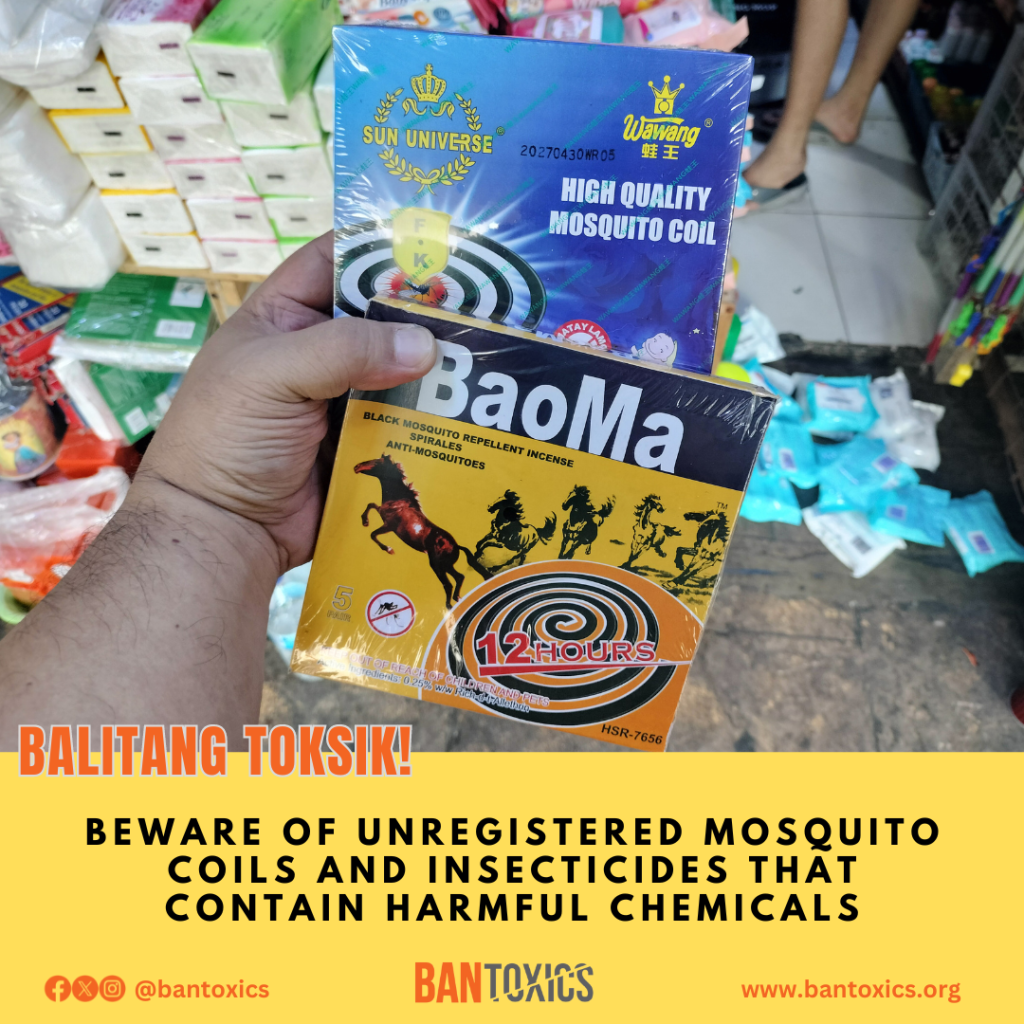
BAN Toxics urges caution in use of mosquito coils, household insecticides, and fogging amid rising dengue cases due to potential health risks
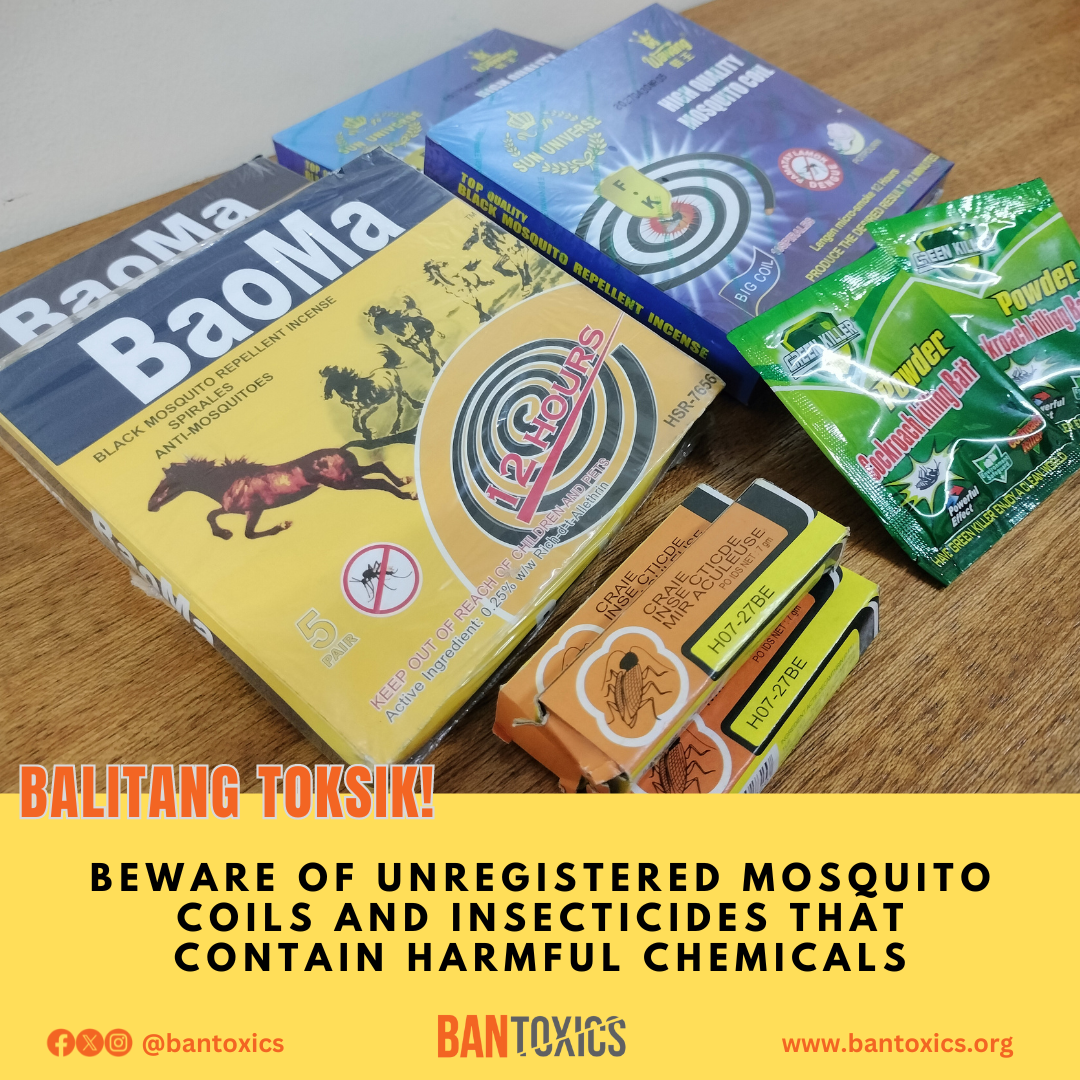
With DOH data showing 33% increase in dengue cases from January 1 to August 3 compared to the same period last year, environmental NGO BAN Toxics is cautioning the public and urging regulatory agencies to address the hazards posed by harmful chemicals and pollutants of concern in mosquito insecticides.
“Protecting oneself from mosquito bites as part of the anti-dengue strategies should not come at the cost of introducing another health hazard.” This was the statement of Thony Dizon, advocacy and campaign officer of the group. “While mosquito coils are an affordable and effective way to reduce mosquito bites, the burning of these coils and industry malpractices raise public health concerns due to their adverse environmental and health impacts.”
Mosquito coils are insecticide products made from a blend of synthetic chemicals, such as pyrethroids, including esbiothrin, and plant-based materials that deter mosquito bites, hold the coil together, and enable it to burn slowly for approximately 8 hours. Once it starts to burn, the insecticides evaporate with the smoke to help repel or kill mosquitoes and particulate matter (PM) are released. Swallowing of aerosol spray containing pyrethrins may cause breathing difficulty, coughing, tremors, seizures, upset stomach, and vomiting among others.
“Burning a single mosquito coil releases the same amount of particulate matter as smoking 75-137 cigarettes. It emits formaldehyde as high as that released from burning 51 cigarettes,” Dizon said, referring to previous scientific studies.
“Exposure to coil smoke may lead to acute and chronic health risks. Prolonged indoor environmental exposure has also been linked to adverse health effects, including asthma, persistent wheeze in children, and lung cancer, neurodevelopmental impairments, reproductive health interference, increased risk of major chronic diseases such as diabetes, cardiovascular disease, and Parkinson’s disease. In Taiwan, it has been associated with 50% of lung cancer cases,” Dizon said.
“A growing number of evidence suggests that long-term low level exposure to the chemicals used in fogging produces lasting damage to neurological and cognitive functions. Fogging with pesticides has also negative environmental impacts as it kills all insects, including beneficial insects and not just mosquitoes.”
The Food and Drug Administration (FDA) and the Department of Health (DOH) have regularly issued public health warnings against the purchase and use of unregistered household/urban pesticides (HUPs), including a number of mosquito coil brands such as Wawang High Quality mosquito coil, Jinma Katol Mosquito Coils Lengen Micro-Smoke, and BaoMa Black Mosquito Repellent Incense Anti-Mosquitoes. The FDA is responsible for regulating the import and export of mosquito coils.
“The FDA has warned against unregistered mosquito coils and other household insecticides, which may be toxic when inhaled or ingested by toddler or children. The greater risk lies in manufacturers misdeclaring the actual content of active ingredients on the packaging. There have been documented cases of misdeclarations violating FDA regulations in the past,” according to Dizon.
Potential hazards of unverified and unregistered HUPs may arise from harmful, toxic, and banned active ingredients that pose imminent dangers to human and animal health, according to the FDA. The use of substandard or possibly adulterated household and urban pesticide products can lead to adverse reactions, including skin irritation, itchiness, anaphylactic shock, respiratory disorders, endocrine complications, brain damage, and organ failure.
BAN Toxics encouraged the public to verify if a pesticide product is registered with the FDA. “Switch to organic mosquito coils and bioinsecticides to reduce exposure to toxic synthetic chemicals. Consider using plant-derived alternative products such as neem, citronella, papaya leaves, garlic, and lemongrass as well as other natural insecticides,” Dizon advised.
“We urge the FDA to promptly conduct post-market surveillance and increase public awareness to help protect public health and safety. We also call on local government units to recall violative products that have entered the market and prevent the continued sale of these banned products.”
The public is urged to implement mosquito control measures on their premises to prevent breeding and spread. These measures include removing standing water from gutters and other areas where it can accumulate, maintaining cleanliness, and eliminating potential mosquito breeding sites in homes and communities.
References:
https://newsinfo.inquirer.net/1972398/doh-dengue-related-deaths-fewer-despite-rise-in-cases
https://www.ncbi.nlm.nih.gov/pmc/articles/PMC6990752/
https://www.fda.gov.ph/fda-advisory-no-2024-0362-public-health-warning-against-the-purchase-and-use-of-unregistered-household-urban-pesticide-hup-jinma-katol-mosquito-coils-lengen-micro-smoke/
https://www.fda.gov.ph/fda-advisory-no-2022-0969-public-health-warning-against-the-purchase-and-use-of-unregistered-household-urban-pesticide-hup-wawang-high-quality-mosquito-coil/
https://www.fda.gov.ph/wp-content/uploads/2022/05/FDA-Advisory-No.-2017-235.pdf
https://pubmed.ncbi.nlm.nih.gov/18305363/
https://www.beyondpesticides.org/assets/media/documents/Naled%20ChemWatch%20Factsheet%20Cited.pdf
http://verification.fda.gov.ph/household_urban_pesticideslist.php
Media contact:
Thony Dizon
Toxics Campaigner
BAN Toxics
0917-8322616


![[Press Release] Women and Child Rights Advocate Sally Ujano Acquitted of Rebellion; Freed After Court Appeals Ruling | Free Sally Ujano Group](https://hronlineph.com/wp-content/uploads/2026/03/fb_img_1774597247993.jpg?w=1024)
![[Video] Anong Talak ng Woke na Taumbayan?](https://hronlineph.com/wp-content/uploads/2026/03/fb_img_1774329031398.jpg?w=1024)
![[Statement] TDC Statement on the three grading period](https://hronlineph.com/wp-content/uploads/2026/03/fb_img_1774326816689.jpg?w=1024)
![[Statement] Reveal true solutions to the country’s water problem: More than conservation, water privatization must end | PMCJ](https://hronlineph.com/wp-content/uploads/2026/03/1004.jpg?w=1024)
 Human Rights Online Philippines
Leave a comment