

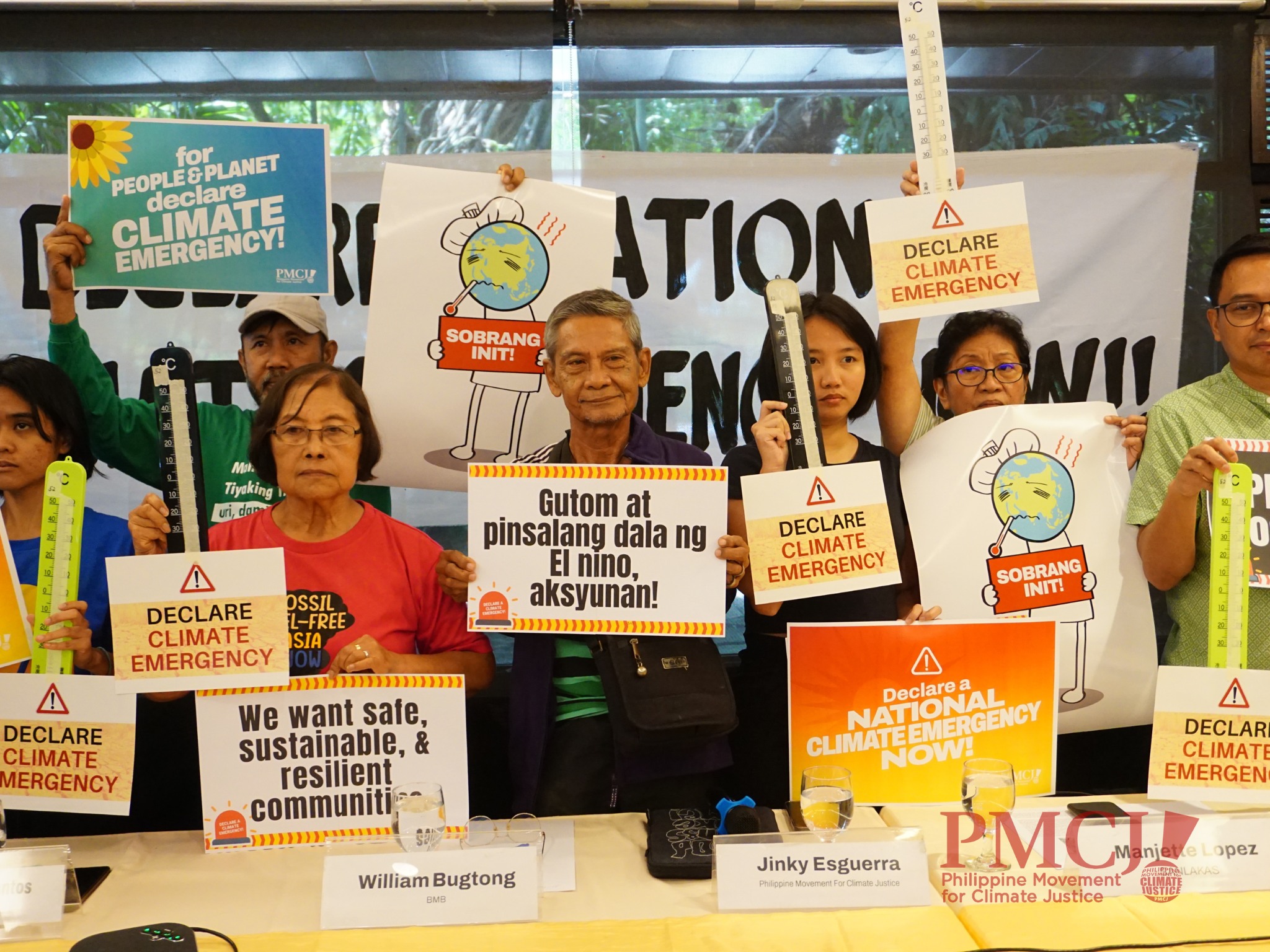
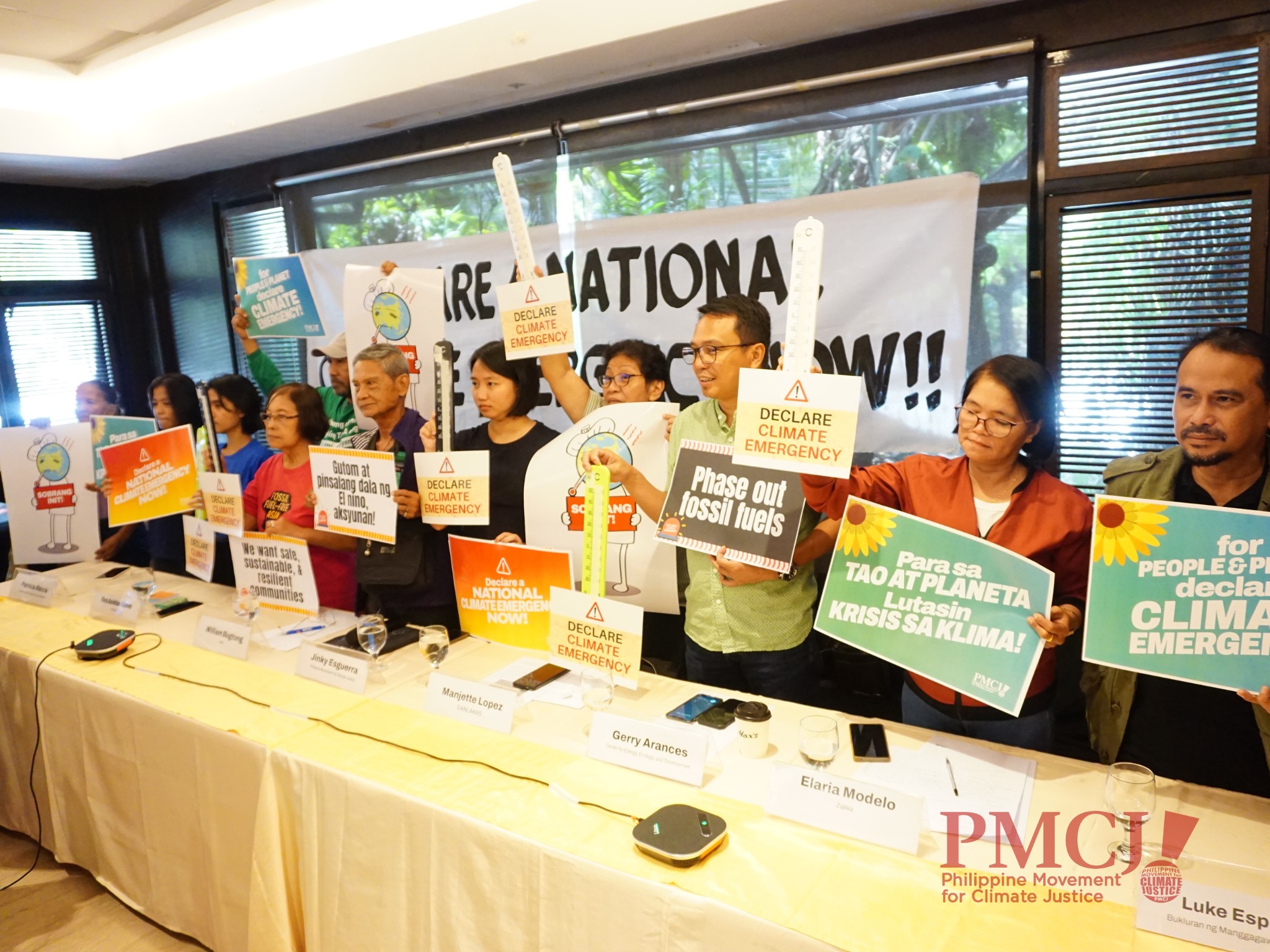
Filipinos are no stranger to hot weather. However, extreme heat index levels brought about by the ongoing El Niño have forced many to stay home. Those who commute or work outside have to endure the scorching sun, risking heat stroke and other health complications.
Since April, many areas in the Philippines have consistently recorded dangerous heat index levels, with some regions going as high as 52C—well beyond the 41C danger zone declared by PAG-ASA.
El Niño began in February 2024. Since then, the oppressive heat has had far-reaching consequences not only on health, but also on the environment and livelihood. Studies predicted that the global economy would lose around three trillion dollars, and that the Philippines would be one of the countries at the biggest risk.
As early as July 2023, the Philippine Atmospheric, Geophysical and Astronomical Services Administration (PAGASA) issued the El Niño advisory. The Marcos administration had ample time to prepare.
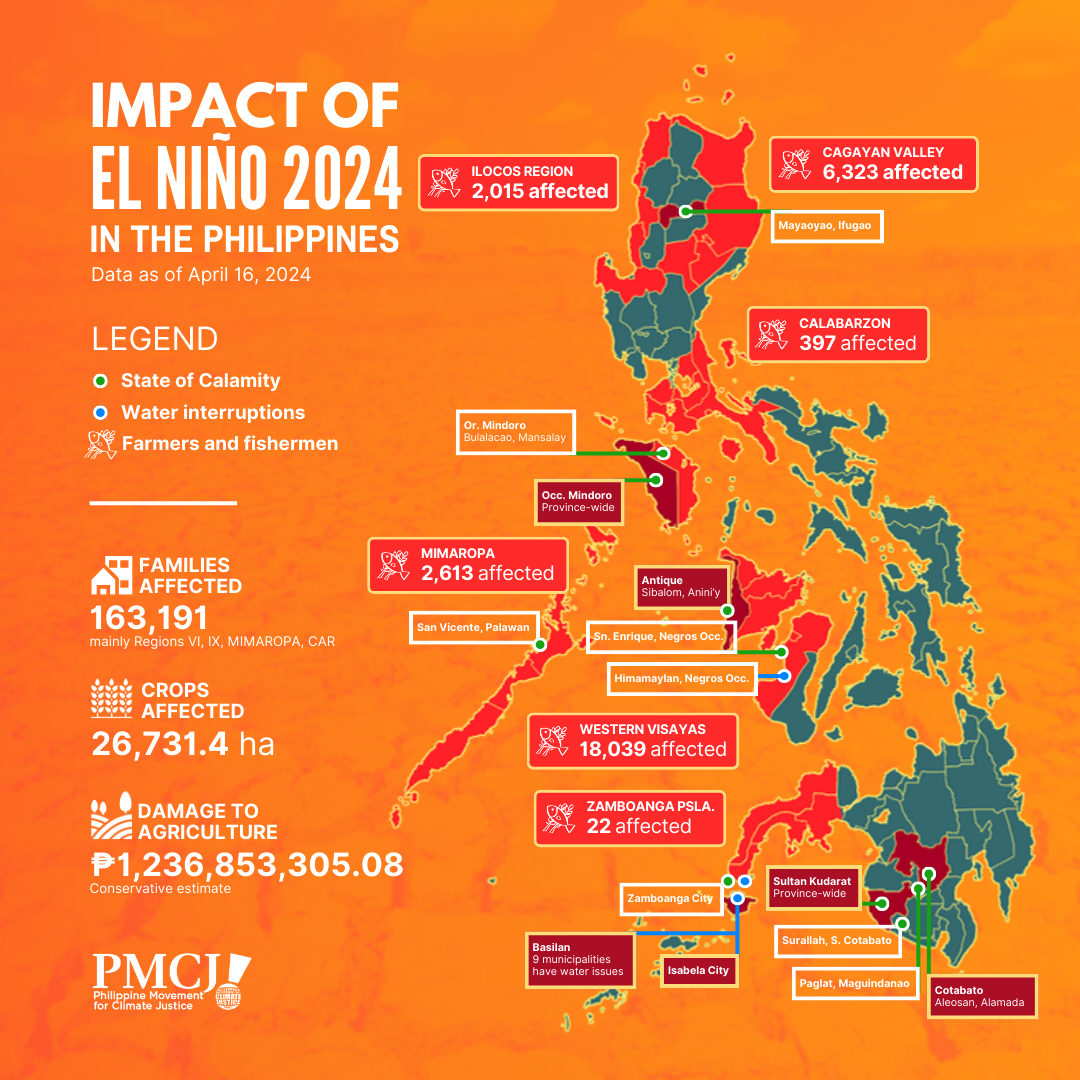
As of this writing, drought has affected at least 31 provinces. Lack of rain combined with extreme heat damaged over 26,731 hectares of crops and affected around 30,000 farmers and fisherfolk, resulting in more than P1.2 billion worth of losses in the agricultural sector.
Both the livelihood of these farmers and the nation’s food supply are at stake. As heat levels rise, food prices will also go up as supply fails to meet demand.
Parts of Visayas and Mindanao also suffered from water shortage. Wells used by communities for their daily water supply are drying up. In Luzon, water service providers have begun operating deep wells to increase water reserves, but these will not hold out long if the drought persists.
Due to the food and water crisis, 17 provinces (and counting) have declared a state of calamity. Despite this, President Ferdinand Marcos Jr. has yet to declare a state of calamity on the national level, and has insisted that the problems be addressed locally.
Climate action groups and civil society organizations will mobilize this coming Earth Day to sound the alarm on El Niño. El Niño is a natural phenomenon, but we cannot deny that human-caused climate change has worsened its effects to the point that we are incurring huge losses we cannot recover from.
We call on the national government to declare a national climate emergency. The Philippines is especially vulnerable to the effects of climate change, and this is proven by the widespread devastation brought by the El Niño. A repeat of the 2016 Mindanao drought fiasco is unacceptable.
We urge the national government to acknowledge the grave impacts of El Niño and, through a climate declaration, prioritize the creation of a national survival plan that will address future impacts. The current approach of disaster response and mitigation planning is insufficient and outdated.
Now more than ever, we need to expedite the just and managed phase out of fossil fuels. This must go hand-in-hand with the just, rapid development of renewable energy.
The Intergovernmental Panel on Climate Change has insistently emphasized the peak of fossil fuel use by 2025. Fossil fuels will only worsen climate change, resulting in even more devastating consequences on our environment, health, and economy.
We need long-term solutions to combat the effects of El Niño and climate change and this can be achieved if the government places climate change front and center in its governance.
STATEMENT
April 22, 2024


![[Press Release] Women and Child Rights Advocate Sally Ujano Acquitted of Rebellion; Freed After Court Appeals Ruling | Free Sally Ujano Group](https://hronlineph.com/wp-content/uploads/2026/03/fb_img_1774597247993.jpg?w=1024)
![[Video] Anong Talak ng Woke na Taumbayan?](https://hronlineph.com/wp-content/uploads/2026/03/fb_img_1774329031398.jpg?w=1024)
![[Statement] TDC Statement on the three grading period](https://hronlineph.com/wp-content/uploads/2026/03/fb_img_1774326816689.jpg?w=1024)
![[Statement] Reveal true solutions to the country’s water problem: More than conservation, water privatization must end | PMCJ](https://hronlineph.com/wp-content/uploads/2026/03/1004.jpg?w=1024)
 Human Rights Online Philippines
Leave a comment