




DAKILA marks #PeoplePower38 beyond traditional conceptions
In celebration of this year’s People Power Anniversary, DAKILA implores people to look beyond People Power through the vignettes of EDSA 1986. As great as it was, the events of 1986 alone do not represent the whole of People Power.
Beyond the stereotypical image of EDSA, 1986 lies a spectrum of colors, people, and events that paved the way for the historic People Power Revolution, culminating in the ousting of the dictator, former Ferdinand Marcos, Sr.
DAKILA, an artists-advocate group, spotlights these often-overlooked aspects of our past in its review of history through the eyes of the unseen, unheard, and forgotten–the mass of people who joined the revolution fueled by their desire to be governed democratically against the oppressive and corrupt dictatorship; the people who took power off the halls of Malacañang into the streets–into the people.
In observance of the 38th anniversary of the People Power Revolution, DAKILA embraces the theme “Ang People Power ay HIGIT PA: Higit pa sa iisang lugar. Higit pa sa iisang taon. Higit pa sa iisang kulay.” This theme is a testament to the enduring legacy of People Power. This force transcends beyond the historical confines of EDSA, surpassing individual narratives of the Aquinos and Marcoses and stretching far beyond the pivotal year of 1986. Through a retrospective lens, it highlights the myriad struggles for democracy and human rights nationwide, capturing the enduring spirit of collective Filipino action.
Today, the spirit of People Power is shrouded by deceit and corruption as attempts at exploiting the Filipino’s voices to advance personal interests become increasingly conspicuous. Dubious “People’s Initiative” for Charter Change (Cha-Cha) and the rivalry between the Marcoses and Dutertes float as the nation’s most recent concerns.
Initiators of Cha-Cha reveal themselves as out-of-step and delusional, claiming that attempts to change the constitution are an initiative of the people while habitually ignoring the urgent needs of the ordinary Filipino amid soaring prices of essential goods and deteriorating educational standards, among others. The so-called “people’s initiative” is a “congressional initiative” with no legal backing, reveals Albay 1st District Rep. Edcel Lagman.
In a statement, Floyd Scott Tiogangco, Communications Director of DAKILA, reminds lawmakers of their “solemn duty: to serve as true representatives of the people, not as conduits for personal gain.”
To this end, DAKILA urges the Filipino people to take a stand and #CancelChaCha, demand that the lawmakers prioritize the people’s urgent needs, and advocate for #WageHike amidst the looming economic crisis.
Honoring the history of collective social action, DAKILA commemorates this year’s People Power anniversary by keeping its essence alive and untamed for the exploits of a few names.
This year’s People Power commemoration includes a series of public screenings of the award-winning documentary 11,103, pockets of activities in various regions such as Iloilo, Cagayan de Oro, Bacolod, and Davao, interactive public performance at the Bantayog ng mga Bayani, as well as an online exhibit of artistic works on Martial Law through the Digital Museum of Martial Law in the Philippines (https://martiallaw.ph/).
To keep the memories of the victims of Martial Law alive, DAKILA amplifies their voices through a series of screenings of 11,103 – a documentary featuring survivor stories of state-sponsored violence during the dark days of dictator Ferdinand Marcos Sr.
In an intimate attempt to uncover stories of Martial Law, DAKILA honors the unsung heroes of People Power through “Forget Me Not,” a participatory public theater performance. Through ‘Ask Me My Name’ bandanas, audiences interact with volunteer actors to unveil the stories and identities of almost forgotten heroes.
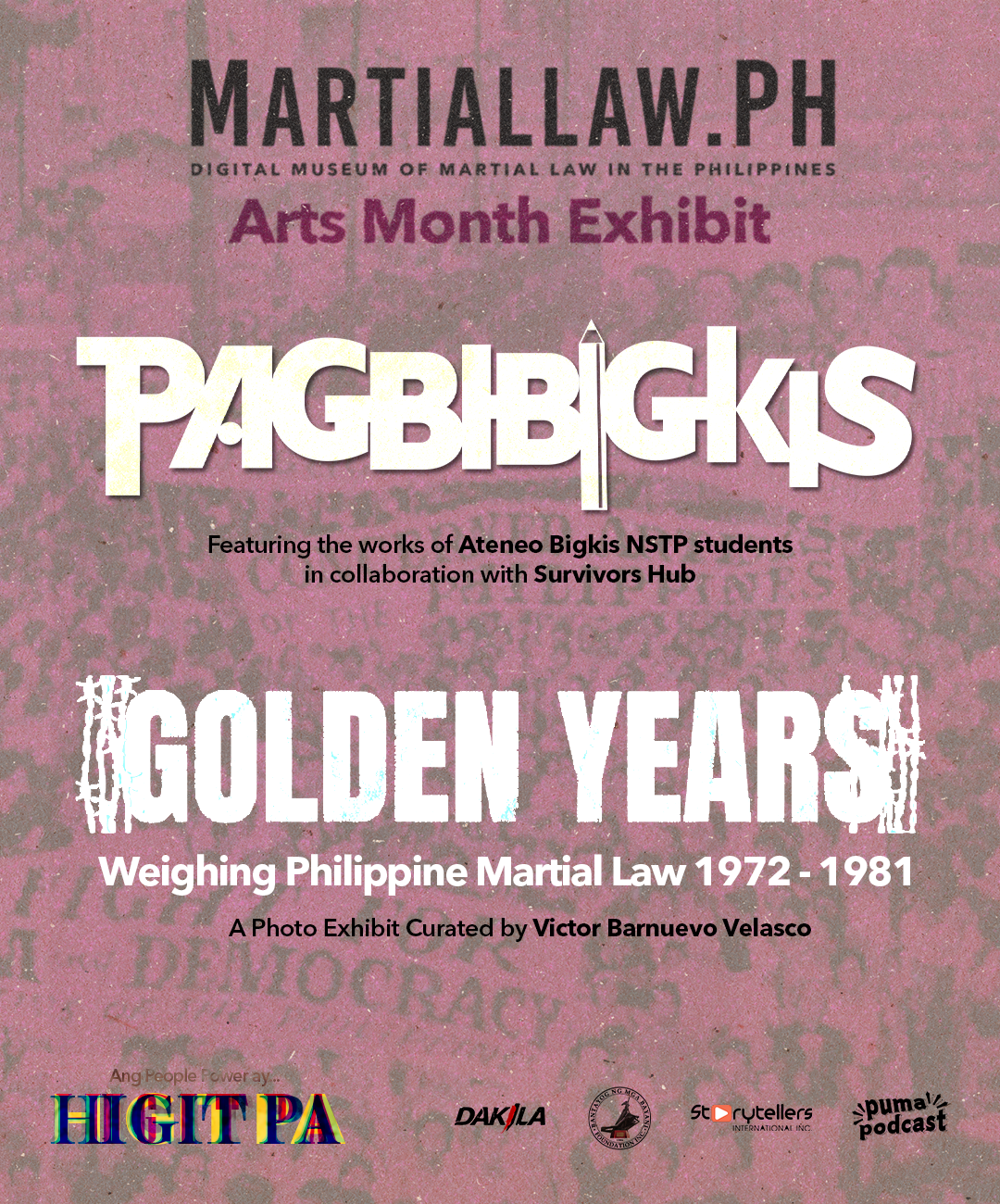
DAKILA, in collaboration with Ateneo Bigkis NSTP Students and the Survivors Hub, celebrates Filipino heroism democracy at the February Arts Month Exhibit. #PAGBIBIGKIS is a web exhibit that the audience can visit at https://martiallaw.ph/. In a separate exhibit titled Golden Years: Weighing Philippine Martial Law 1972-1981, Victor Barnuevo Velasco subjects the narrative of “Golden Years” to scrutiny through a curation of photos that shows the opposite. Both of which serve as a visual reminder: To remember is to fight!
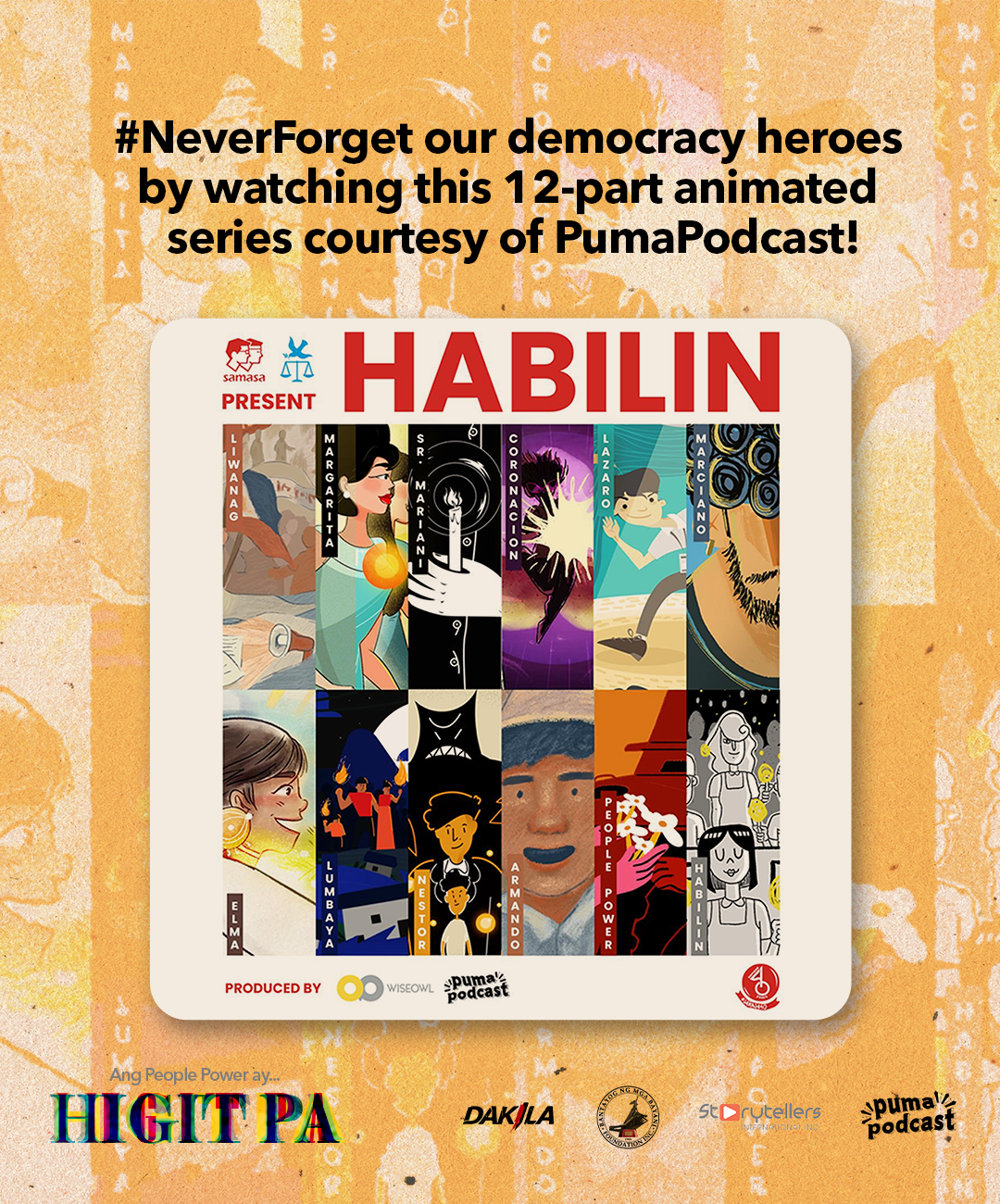
For young Filipinos, the years of Martial Law may seem like an unreachable past, obscured by the false nostalgia of the “Golden Years” of Philippine politics and economy. PumaPodcast, through a kid-friendly way of passing on the extraordinary stories of Martial Law, combats this narrative through “Habilin,” a 12-part podcast and animated series showcasing the lives of ordinary Filipinos who joined the struggle for their rights and democracy.
Highlighting the stories from “below,” beyond the headliner names of 1986 EDSA giants, reaffirms that the People Power Revolution manifested the people’s desire for democratic governance. The struggle for democracy and human rights by different sectors from all over the country consolidated the collective resistance that ultimately toppled the dictator.
As the dictator’s son ascends to power seated upon his father’s grave, the triumph that EDSA saw in 1986 begins to unravel.
Even before 1986, political figures have repeatedly exploited the people’s voices to advance their motives, with the “People’s Initiative” as its most recent configuration.
In keeping the power grounded in the people, it is imperative to view the People Power Revolution of 1986 beyond the usual place, year, and color that supposedly defined it throughout the years. The People Power Revolution is the culmination of the struggle of the Filipino people from different sectors, generations, and regions against dictatorship. Therefore, every democracy-loving Filipino must own its victory, lessons, and relevance.
For media inquiries and further information, please contact:
Press Contact:
John Joshua Barbo
Public Relations Manager
DAKILA
info@dakila.org.ph | +639625281145
ABOUT DAKILA:
DAKILA – Philippine Collective for Modern Heroism is an organization of artists, cultural and development activists, students, young professionals, and individuals creatively building a movement of heroism toward social transformation.


![[Press Release] Women and Child Rights Advocate Sally Ujano Acquitted of Rebellion; Freed After Court Appeals Ruling | Free Sally Ujano Group](https://hronlineph.com/wp-content/uploads/2026/03/fb_img_1774597247993.jpg?w=1024)
![[Video] Anong Talak ng Woke na Taumbayan?](https://hronlineph.com/wp-content/uploads/2026/03/fb_img_1774329031398.jpg?w=1024)
![[Statement] TDC Statement on the three grading period](https://hronlineph.com/wp-content/uploads/2026/03/fb_img_1774326816689.jpg?w=1024)
![[Statement] Reveal true solutions to the country’s water problem: More than conservation, water privatization must end | PMCJ](https://hronlineph.com/wp-content/uploads/2026/03/1004.jpg?w=1024)
 Human Rights Online Philippines
Leave a comment